Accessible Materials
Montessori materials are accessible to the child and available for purposeful exploration and repeated practice.
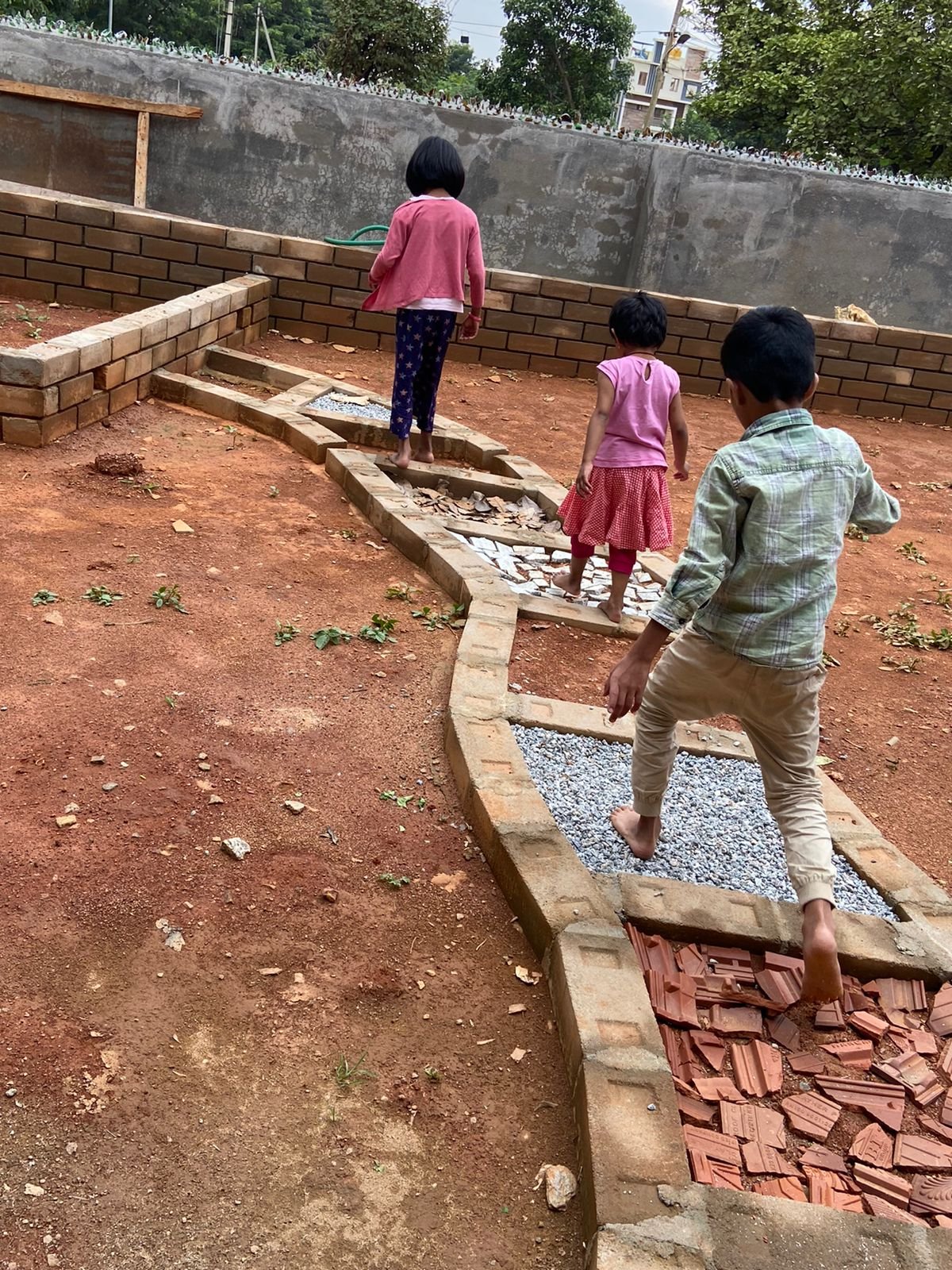
The Montessori approach allows children to learn through understanding, rather than through being told. From this understanding your child is able to develop confidence and a joy in learning.
By understanding how children learn the teachers can provide your
child with tools and opportunities tailored to the way they
experience the world around them. At the same time there is a
strong physical dimension to many Montessori activities,
encouraging dexterity, balance and appreciation of shapes,
colors and sizes.
What all these elements have in common is that they are providing
the building blocks of future learning, hardwiring your child’s
capacity to engage with new material and information and providing the tools with which to manipulate it.
A thoughtfully prepared Montessori environment where children learn through understanding, purposeful activity, exploration and meaningful experiences.
The Montessori approach allows children to learn through understanding, rather than simply through being told. Through this understanding, children develop confidence, independence and a genuine joy in learning.
At Aikyam Montessori House of Children, teachers observe how children learn and provide carefully prepared materials, experiences and opportunities suited to their developmental needs.
Montessori activities also have a strong physical dimension, encouraging dexterity, balance and an appreciation of shapes, colours and sizes. These experiences provide building blocks for future learning and help children develop the ability to engage with, understand and work with new information.
Developing trust in one's own ability.
Learning to act, choose and work purposefully.
Building attention through meaningful activity.
Discovering the pleasure of understanding.
A prepared environment gives children access to meaningful choices while encouraging movement, responsibility, order and respect.
Montessori materials are accessible to the child and available for purposeful exploration and repeated practice.
Children experience freedom of movement indoors and outdoors and are able to make meaningful choices within the prepared environment.
Children learn to care for their work, materials and environment while developing awareness of the needs of others.
A calm, orderly and aesthetically pleasing environment supports concentration and encourages self-directed activity.
Learning the Montessori way is, literally, learning for life.
The Aikyam Montessori Pre-Primary curriculum brings together practical experiences, sensorial exploration, mathematics, language, science, geography and art in a connected learning environment.
Everyday experiences that help children become confident, capable and increasingly independent.
Practical Life activities are activities of everyday life. Children observe these activities in their environment and gain knowledge through real experiences of accomplishing purposeful life skills.
These activities are cultural and connected to the child's time and place. Through participation in daily life, children develop a sense of belonging and learn about their culture, their environment and what it means to be a contributing member of a community.
Practical Life exercises support self-confidence, independence and preparation for other areas of learning.
Setting the table, preparing snack, caring for the environment and learning how to host guests give children opportunities to develop independence, responsibility and social skills needed in everyday life.
Refining the senses through carefully designed Montessori materials and purposeful repetition.
Montessori recognised the importance of sensory experiences during early childhood. Sensorial activities help children organise the many impressions received through their senses.
Montessori sensorial materials are designed to help children develop discrimination, order and increasingly refined sensory awareness. Many materials include a built-in control of error, allowing children to recognise mistakes and work towards correction independently.
Through sensorial exploration, children develop observation, logical thinking and an increasingly structured understanding of their environment.
Exploring differences in dimension, width, length and size.
Developing awareness and discrimination through touch.
Exploring sound and developing auditory discrimination.
Exploring and identifying different smells.
Developing awareness of taste through direct experience.
Moving naturally from concrete materials towards abstract mathematical understanding.
Learning mathematical concepts in the Montessori environment begins concretely and progresses towards the abstract. Concepts develop from simple to complex, with the process introduced before facts.
Through carefully sequenced materials, children experience order, coordination, concentration and independence. The materials are presented according to the child's development and readiness rather than according to a fixed pace.
Introducing quantities from one through ten and building the connection between quantity, numeral and sequence.
Children explore units, tens, hundreds and thousands through concrete golden bead materials.
Developing number recognition, sequence, counting and skip-counting concepts.
Mathematical operations are introduced using concrete materials including the golden bead material and progressively extended through Montessori operations work.
Montessori mathematics uses concrete materials to help children experience and internalise abstract mathematical ideas. The hand remains involved in the learning process as children gradually move from concrete materials towards abstract thinking.
Building spoken language, vocabulary, writing and reading through meaningful communication.
The Montessori 3–6 language environment is a natural extension of the communication patterns children have already absorbed. Every conversation, story, new word and language experience contributes to the child's developing ability to communicate and read.
The Montessori Pre-Primary classroom places spoken language at the foundation of linguistic expression. Children hear and use precise vocabulary throughout the prepared environment and are encouraged to converse with peers and adults.
Reading is introduced phonetically as the child is ready. Concrete materials, beginning with experiences such as sandpaper letters and progressing towards more advanced language work, allow children to take small, logical and sequential steps towards independent reading.
Developing communication through conversation, vocabulary-rich experiences and purposeful interaction.
Writing is approached as a direct preparation for reading, with concrete materials supporting gradual progression.
Encouraging curiosity, observation and discovery of the natural world.
The Montessori science curriculum encourages children to explore their natural curiosity and discover answers to their questions about the world around them.
Children are introduced to a process of questioning, hypothesis, procedure, observation, analysis and conclusion. This approach encourages children to think carefully before deciding, observe results and use information to reach thoughtful conclusions.
Areas of exploration include zoology, botany, matter, energy, earth science, astronomy, human development and personal health. Firsthand experience with the natural world and scientific materials is an important part of the learning process.
Children also develop appropriate scientific vocabulary and learn about animal classification, botanical components, physical processes, earth forces and other aspects of the natural world.
Parts of the tree, leaf and flower; plant life and observation.
Birds, horses, butterflies, fish, frogs and turtles.
Exploring growth, transformation and stages of life.
Apples, pumpkins, turkeys and other real-world observations.
Discovering the physical world and the people, places and cultures that make it diverse.
Through sensory experiences, imaginative stories and hands-on Montessori materials, children begin to understand their physical world.
Children can touch and explore a sphere and compare it with the globe, build landforms and work with water forms. Montessori puzzle maps allow children to physically explore continents and oceans while developing an understanding of the world around them.
Children also discover how people live in different parts of the world, exploring food, music, clothing, traditions, holidays, customs, housing, plants and animals. These experiences encourage appreciation of both similarities and differences among people and cultures.
Developing creativity, self-expression and appreciation for artistic work.
The Primary Art Curriculum builds on the foundation developed through Practical Life experiences, where children develop control of movement, fine motor skills and eye-hand coordination.
Art experiences seek to balance skill development with free exploration and encourage the child's natural desire for self-expression.
Children can gradually build an art vocabulary while becoming aware of artists, techniques and different forms of artistic expression, including architecture, painting, sculpture and digital forms of art.
Through artistic experiences, children develop appreciation for the contributions of art and artists to societies and cultures. They begin to understand art as a non-verbal way of expressing opinions, perceptions, feelings and history.
Children also discover connections between art and everyday life, including mathematics, nature, cooking and movement.
Finding individual ways to communicate through art.
Experimenting with materials, techniques and ideas.
Developing awareness of artists, cultures and artistic traditions.
Discovering links between art, nature, mathematics and daily life.
Every child is encouraged to find and nourish the artist within.
In the Montessori environment, children experience ideas through purposeful activity before gradually moving towards greater abstraction. The prepared environment gives children opportunities to observe, choose, practise, repeat and discover.
Aikyam Montessori House of Children offers a Montessori Pre-Primary curriculum for children from 2½ to 6 years of age. The curriculum brings together Practical Life, Sensorial, Mathematics, Language, Science, Geography and Art within a carefully prepared Montessori environment.
Children are encouraged to develop independence, concentration, coordination, confidence, curiosity and a joy in learning through hands-on experiences and purposeful activity.
Discover how a thoughtfully prepared environment can support your child's independence, curiosity and love of learning.
Schedule a Visit